Social Empowerment Education Partnership
QUEST Alliance
The National Institute for Social Empowerment (NISE) is proud to be a learning partner of Quest Alliance, a leading non-profit organization in India dedicated to transforming education and skill development ecosystems.
Through this partnership, NISE integrates innovative, technology-enabled learning methodologies and youth-centric approaches into its training programmes. Quest Alliance is widely recognized for its work in building 21st-century skills such as digital literacy, critical thinking, communication, and adaptability among young people.
Strengthening Skill Development through Collaboration
As a learning partner, NISE benefits from:
- Access to modern, blended learning tools and digital content
- Capacity building for trainers and facilitators
- Learner-centered training methodologies
- Emphasis on life skills, digital skills, and future readiness
- Continuous learning and improvement frameworks
This collaboration enhances the quality and effectiveness of NISE’s skill development initiatives, ensuring that trainees are not only technically skilled but also equipped with essential life and employability skills required in today’s dynamic job market.
Empowering Youth for the Future
By combining NISE’s grassroots implementation experience with Quest Alliance’s innovative learning solutions, the partnership aims to create confident, skilled, and future-ready youth. The focus is on enabling individuals from underserved communities to access better livelihood opportunities and participate meaningfully in the evolving economy.
This collaboration reflects NISE’s commitment to delivering high-quality, inclusive, and forward-looking skill development programmes aligned with national and global standards.
Collaboration with AICTE-Affiliated Institutions
The National Institute for Social Empowerment (NISE) actively collaborates with AICTE-affiliated colleges to implement structured skill development programmes within academic institutions. These partnerships are aimed at bridging the gap between formal education and industry requirements by equipping students with practical, job-oriented skills.
NISE works closely with institutions such as JDT Polytechnic College and Don Bosco College, supporting them in designing and delivering industry-relevant training programmes that complement the academic curriculum.
Our Role in Institutional Partnerships
Under these collaborations, NISE provides:
- Industry-aligned curriculum and training modules
- Qualified trainers and subject matter experts
- Hands-on practical training and workshops
- Soft skills and employability enhancement sessions
- Assessment, certification, and placement support
Enhancing Student Employability
By integrating skill development into campus learning, NISE enables students to gain real-world exposure and technical competencies alongside their academic studies. This approach significantly improves employability outcomes and prepares students to meet evolving industry demands.
Creating Industry-Ready Graduates
The partnership model focuses on:
- Aligning training with current job market needs
- Promoting experiential and applied learning
- Strengthening industry-institution linkages
- Supporting career pathways through placements and internships
NABARD SDP
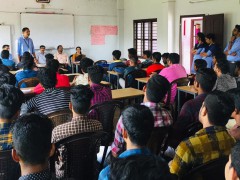
The National Institute for Social Empowerment (NISE) is actively implementing skill development programmes supported by National Bank for Agriculture and Rural Development (NABARD) across the districts of Kannur, Kasaragod, and Wayanad in Kerala. These initiatives are designed to empower rural youth with industry-relevant skills, enhance employability, and create sustainable livelihood opportunities.
NABARD’s skill development interventions are structured to address the skill gaps in rural India through demand-driven and outcome-based training programmes, with a strong focus on wage employment and self-employment opportunities.
Our Approach
NISE adopts a holistic approach to skill development by combining classroom training, practical exposure, and placement support. The programmes are tailored to meet current industry requirements and ensure that participants are job-ready upon successful completion.
Key features of the programme include:
- Industry-aligned curriculum and hands-on training
- Focus on marginalized and unemployed rural youth
- Soft skills and employability enhancement modules
- Assessment and certification
- Placement assistance and post-placement support
Courses Offered
- Food and Beverage Service Steward This course prepares candidates for employment in the hospitality sector, focusing on restaurant service, customer handling, food safety, and professional etiquette.
- Field Engineer – RACW (Refrigeration and Air Conditioning & Washing Machine) A technical course designed to equip trainees with skills in installation, maintenance, and repair of refrigeration systems, air conditioners, and washing machines.
- Assistant Electrician This programme provides foundational and practical knowledge in electrical systems, wiring, installation, and maintenance, enabling candidates to work in both residential and commercial settings.
Geographical Coverage
The programmes are implemented across:
- Kannur District
- Kasaragod District
- Wayanad District
These regions include rural and underserved communities where access to quality skill training and employment opportunities is limited.
Impact and Outcomes
Through these initiatives, NISE aims to:
- Enhance employability among rural youth
- Promote inclusive growth and economic empowerment
- Facilitate wage employment in relevant sectors
- Contribute to the development of a skilled workforce in Kerala